Your choice of coffee beans is very personal. If you buy your coffee already ground, you might think you even need to know how to grind coffee beans.
My grandmother loved a big cup of Maxwell House as hot as possible. My Dad vacillates between his Japanese cold brew and a Nespresso. My mom loves her French press coffee so much that she has 4 French presses. My corkers are fine with whatever the boss buys because it’s free.
I’m pickier (father like daughter?). I’ve had the pleasure of working for an indie coffee roaster here in North Texas. I learned about the different grinds and why they’re so important for the type of coffee or machine you’re using.
You can have the fanciest home espresso machine with single-origin, fair trade, organic beans, but if you don’t have the grind right, it’s all for naught.
And that’s a damn shame.
It’s akin to buying a Waygu ribeye and boiling it.
So, why would you use the wrong grind for the coffee maker you’re using?
Let’s look at this important question and why your coffee’s grind is so important to a good cup.
It doesn’t matter whether you prefer Starbucks or Dunkin, by the time you’re finished reading this post, you’ll know how to grind coffee beans the right way.
Why Extraction Is Key to Grinding Coffee Beans
To brew the perfect cup of coffee, even drip coffee, you must understand what extraction means. We all know that coffee beans are picked from the tree then roasted and bagged.
You buy said bag of coffee and take it home. You might grind your own coffee or buy it pre-ground. Either way, no one is brewing pots of whole beans coffee.
Well, they might be, but those are going to be some sad pots of coffee.
For simplicity’s sake, we are just going to be talking about how to grind your coffee at home.
Extraction is a coffee-brewing term that refers to the amount (or lack) of actual flavor in the brewed coffee you get out of the beans. Once you understand this, you’ll be able to never under extract or over your homemade coffee; espresso, or drip.
The goal is to achieve a perfect extraction of your coffee beans. If the grind is too coarse, you’ll have a weak under extracted cup of coffee. If your grind is too fine, you’ll have a bitter, over extracted cup of coffee.
Maybe you’ve noticed that your coffee at home doesn’t taste as smooth as it does from your local coffee shop. If it’s salty, sour, and/ or acidic, your coffee grind is under extracted (too coarse). If your home brewed coffee is bitter or lacking any real coffee bean flavor, you have an over extracted (too fine of a grind) cup of coffee.
So, where does that leave us?
It all comes down to 2 factors — what kind of coffee maker are you using, and what type of finished coffee drink are you making?
Let’s take a look at these factors.
Which Coffee Grind Should You Use with Which Coffee Maker?
In modern times we have more choices than ever on what kind of coffee we want when we wake up. I’ve mentioned that I don’t try lattes at home.
But I love my Moka espresso maker, cold brew, and even drip coffee makers.
They all have their places in my little coffee world.
Where and how does one know what grind to use on what kind of coffee maker?
I’ve got you.
Here’s an easy chart that explains what kind of grind to use with which coffee maker.
Coffee Bean Grind Guide

That’s a lot of information, so what do you do with this now you know about the different coffee grinds?
You buy a new coffee grinder; that’s what you do.
The different grinds will give you the extraction intended for the kind of coffee you’re trying to achieve. If you used an espresso grind on a French press, you’d have a cup of water and coffee mud. The espresso grind isn’t meant for a French press coffee maker. If you tried to make a big jar of cold brew with a medium grind, you’d end up with a super weak cold brew because of the grind’s under-extraction.
I hope this chart helps. Please keep it handy for future coffee endeavors. Let’s talk about coffee grinders for a second because you can’t achieve different grinds with your basic coffee grinder.
What Kind of Coffee Grinder Should You Use?
Almost every coffee drinker who brews their own coffee will have a coffee grinder in their cupboard. In my case, it’s on the counter. They’re convenient, affordable, and give you a sense of fresh coffee.
I’m sorry to be the one to break the news to you.
But you’ve been duped.
Blade coffee grinders are terrible for your coffee beans. Blade coffee grinders will not give you the proper, uniform grind you need to get the correct grind for each type of coffee maker/ coffee drink you’re wanting. The blade coffee grind is most likely the culprit to your coffee not tasting as good as your favorite coffee shop.
A blade grinder can’t give you varying grind styles, nor can it give you a uniform grind at all. A blade grinder design will give you a coffee grind that will consist of everything from espresso grind all the way up to a French press grind all in one grind.
The problem with this is that you’re going to have a pot that was brewed with some beans over extracted and some under extracted. You end up with a nasty pot of coffee.
Remember the flavors I talked about earlier in under or over extracted coffee?
This is the perfect storm of both.
You’ll note muddy coffee flavors that include some or a lot of salty, acidic, and/ or bitter. This makes for a terrible cup of coffee.
Most home coffee grinders are blade coffee grinders. The blade isn’t able to give you a consistent grind. Blade coffee grinders also don’t give you a lot of freedom to grind your coffee to the right coarseness required for your specific coffee maker.
So, what is a home coffee brewer to do? Use the blade grinder for what it’s meant for, grinder your own spices, not coffee beans.
You have a couple of options.
Pre-ground coffee is actually a better bet than blade ground coffee. If you drink enough coffee at home (or office), buying ground coffee beans is a great bet because of the ease, and I can promise you that the brand has ground the beans to the correct grind for the basic drip maker.
Seems simple, right?
But there are a few downsides to pre-ground beans:
1 – If you aren’t drinking a bag’s worth of coffee in a week or so, your pre-ground coffee isn’t going to stay fresh. Once the brand grinds the beans in their facility, they’re vacuumed packed to preserve the coffee’s full flavor. When beans are ground, they have a fairly short shelf life once you break the vacuum seal. So there’s a chance that your coffee grounds will go stale.
A myriad of factors can also affect your ground coffee’s freshness. I’ll cover that in a future post.
2- If you aren’t using a traditional flat bottomed drip coffee maker to brew your coffee, you’re going to run into some issues with the coffee’s taste. The grind (in most) bags of vacuumed sealed coffee will be for a drip coffee maker.
This becomes a problem in the flavor (even strength) if you’re using something like a French press or Moka espresso maker. This style of grind isn’t suitable for those coffee brewers. You’re not going to get the correct extraction you need for the specific coffee maker.
3- It’s an industry standard to grind your beans for the day you need them. You can see the problem with a big of preground coffee.
These issues leave us with one best solution:
The burr coffee grinder.
I have one, and I adore it. I had the advantage of working for a coffee roaster here in North Texas so that I could have my coffee ground in a professional grinder on the spot. When I changed jobs, I found myself at a loss for how to brew my beloved cold brew Sumatra beans.
Do you know what I did?
I got on Amazon and started researching coffee burr grinders. Let’s talk about burr grinders.
How to Use a Burr (Mill) Coffee Grinder
A burr coffee grinder is what any good coffee shop uses to grind their beans. It’s also the style grinder that you can find in some grocery stores with bulk bins of coffee that you can grind yourself before you take it home.
Here’s how a burr coffee grinder works:
Instead of a fast-moving metal blade spinning the whole beans around until they’re ground, a burr grinder works more like a wheat mill. A hopper on the top feeds a plastic, ceramic, or metal grinder that is usually flat (think a stone grinder set up) or a conical grinder that gently grinds the beans to the desired grind.
Once ground, the coffee is extruded into a container for you to take directly to your coffee maker of choice. Most of the electric ones (yes, there are some hand-cranked ones) have various grind settings. Mine goes from 1 (Turkish coffee) all the way up to 18 (cold brew). This grinder has changed my entire home coffee game.
If I want a Moka espresso one morning, I can simply grind enough fresh whole beans for my needs.
If I want to make cold brew, I can dump 4.6 oz of my prized Sumatra beans in the burr grinder and cold brew away.
I found myself taking my coffee routine a lot more seriously once I had a burr grinder. I had many possibilities, and all can be achieved with a burr grinder. Let’s talk about a couple of downsides to a burr grinder:
Burr Grinder Cons (But They’re Worth It)
1 – They can be expensive. Mine isn’t that expensive but compared to some of the ones on the market mine is budget friendlhy. I bought the Cuisinart DBM-8 Supreme Grind Automatic Burr Mill. I think I bought mine for around $60.00. This was an investment for me, but I was on a mission. Coffee brew accessories are much like anything else. You use them a lot, so you get what you pay for. Some lower-end grinders sell for around $35.00, but they will not perform like a more expensive burr grinder.
2- Burr coffee grinders are messy. If you’ve ever wondered why Starbucks’ decor is so dark, it’s because the coffee grinding process is messy. When you’re grinding a lot of beans in a burr grinder, there’s going to be coffee grounds in places you didn’t expect. Don’t let this deter you from using a burr grinder. It’s the same with homemade pie dough.
You can’t avoid the coffee dust that comes with this kind of coffee grinder.
But I promise you this:
It’s worth it.
3- Burr coffee grinders have a little bit of a learning curve. My Cuisinart burr grinder has the grinds by a series of dots that go from small (extra fine) all the way up to a larger dot (cold brew grind). I had to educate myself on the different types of grinds and what they’re used for (see earlier chart).
But once I had that down, I was good to go.
4- They’re bigger than classic blade coffee grinders. This is because of the mechanisms needed for a burr grinder. I mentioned that my coffee grinder sits out on the counter.
This is why.
I wouldn’t have room in my tiny studio apartment in college for one of these, but I couldn’t afford it anyway.
So, get repurose your blade grinder for fresh ground spices.
Buy a burr coffee grinder or buy ground beans.
Either’s a simple solution to a problem that plagues a lot of home coffee brewers.
The Best 3 Burr Coffee Grinders
Now that you’ve hopefully come over to the richer, more enjoyable side of home coffee, I wanted to talk about my picks for the best burr coffee grinders. I’m going to give you a budget-friendly option, a mid-range option, and a luxury option. One thing to note is different brands refer to burr grinders as mill grinders as well.
Let’s dive in.
1 – Budget-Friendly – Secura Electric Burr Coffee Grinder Mill
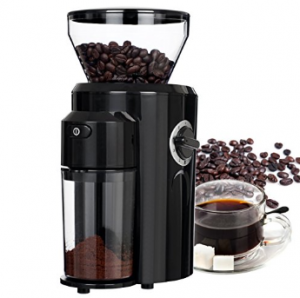 The Secura Electric Burr Coffee Grinder Mill is a great budget-friendly option if you’re looking to save some dollars but want a quality burr coffee grinder. This machine is sleek looking and would fit with almost any kitchen or office decor.
This burr grinder has 18 grinding options giving you every grind from extra fine (Turkish) all the way up to an extra coarse (cold brew). You can also decide how many cups you want to grind at a time. This burr grinder gives you the option of grinding 2-18 cups at one time.
This burr grinder is machine washable and easy to take apart. The conical feeder ensures an even grind that won’t waste your coffee beans. The catcher is huge so that you can grind up to a whole pound of coffee in one session. I love this because of how much coffee you need for cold brew.
This is a great starter burr grinder. I think you’ll be able to brew a variety of coffee drinks. As long as you follow the above grind chart, you can start enjoying fantastic home-brewed coffee.
2 – Mid-Range – Bodum BISTRO Burr Coffee Grinder
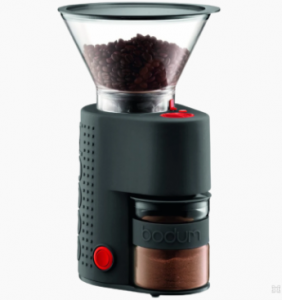 Bodum is a quintessential brand in the coffee world. They’re most famous for their iconic French press coffee makers. If you were a cool girl in my early 30s, you had the copper one. This coffee maker is more expensive than the Secura, but I can assure you you’re getting more than just the brand name of Bodum.
Bodum really steps up to the needs of home-brewed coffee enthusiasts when they released this burr grinder. This grinder offers users multiple grind opinions, including a fine for espresso and coarse for French press. This grinder has 12 different, easy to use, grind settings making this a great burr grinder for new users and veterans alike.
What the Bodum BISTRO offers that the Secura doesn’t is the conical grinding mechanism is guaranteed to not lock up because of the small stones that keep things moving. The Bodum BISTRO also has a beautiful glass catching container that is easy to use, and most of the machine’s removable parts are dishwasher safe.
You can buy the Bodum BISTRO Burr Coffe Grinder at Amazon with free shipping with a Prime membership.
3- Luxury – Baratza Vario Flat Burr Coffee Grinder
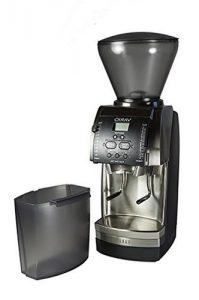 Burr coffee grinders can get expensive because of the professional options on the market. The Baratza Vario is not the most expensive, but it will set you back a car large car payment.
But if you’re looking for a top of the line, award-winning burr grinder, then why not?
This grinder isn’t the most expensive, but it’s up there.
The Baratza has won the Specialty Coffee Association’s award for Best Coffee Grinder. This machine is programmable through its electronic interface. It offers users up to 230 different grind settings. If you’re a picky home coffee brewer, then you’ll be able to get the exact grind that works best for you.
The Vario lets you preprogrammed 3 presets for one-touch grinding on the go. The ceramic lades are not going to dull like metal for plastic burr blades can do overtime. This is a top of the line machine that is going to outperform any other at-home burr grinder.
This machine is beautiful to look at. It also offers a carriage for your filter so you can grind exactly what you need and take directly to your coffee brewer of choice, as well as a generic catcher for larger grinding sessions. The Braratza brand offers exceptional warranties on their parts and world-class customer support.
You can buy the Baratza Vario Flat Burr Grinder at Amazon with free shipping. Expect to spend a few hundred dollars on this one.
Conclusion
I hope you have a better grasp of the importance of code bean extraction, the difference in grind coarseness, and why you need to buy a burr coffee grinder. Knowing how to grind coffee beans results in a great cup of home-brewed coffee.
Now that you have the tools never to brew a bitter or salty pot of drip coffee — even a French press — bookmark this post for future reference. I promise you that if you follow these steps, do a little reading on which grind is best for your preferred coffee maker, you’ll never dump out a pot of coffee to go waiting in line at Starbucks.
Happy home coffee brewing.